


Find an emergency number
Select the country or service that fits your situation. If you are travelling, check local numbers as soon as you arrive and keep them offline. 112 is the European emergency number; in France, the 15 allows to join the emergency medical aid service.
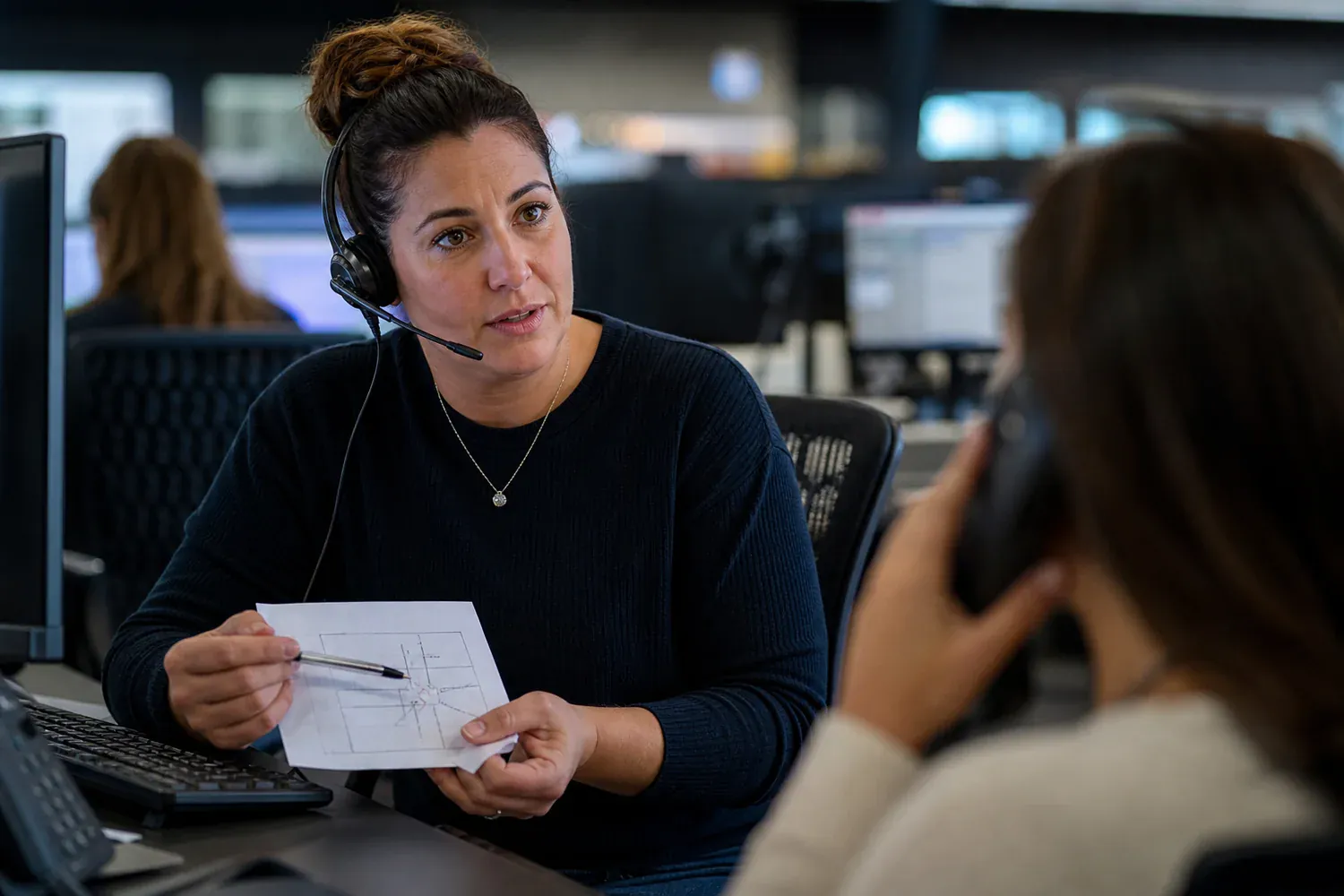
On the telephone, start with the exact address, the municipality, the floor or the landmark. Then describe what happened, the number of people involved, their current status and the dangers still present. Do not hang up until the operator asks you: he can ask you questions or guide you during the arrival of the rescue.
Complete list of numbers
Waiting for help
Your safety is first. A person who enters a dangerous area without protection may become an additional victim. Observe the situation remotely and follow the instructions received.
- Stay away from the danger only if it can be done without additional risk and prevent others from approaching.
- Do not touch a substance, animal, waste or potentially contaminated object with bare hands.
- Do not cause vomiting and do not administer any medicine, drink or product without professional instruction.
- Indicate your precise location, the number of people involved, the visible symptoms and the supposed nature of the exposure.
- Keep the packaging, label, photograph or product name if possible without exposing you.
- Keep your phone available, facilitate emergency access and send someone to guide them when safe.
Potential biological exposure
After a bite, bite, projection on a mucous membrane, contaminated cut or unusual respiratory exposure, apply the first aid procedure prescribed at the site and get medical advice quickly. Some post-exposure measures are useful only in short time frames.
Note the time, duration, route of exposure, the part of the body concerned, the equipment carried and any information available on the source. Do not seek to collect, smell, clean or transport any unknown material on your own initiative. In a professional setting, report the incident immediately according to the internal procedure.
The absence of immediate symptoms does not always remove a risk. Conversely, suspected exposure does not automatically lead to infection. Only an assessment taking into account the agent, contact and person can determine the useful follow-up. To prepare this information, consult the guide first reflexes after biological exposure.
Official sources of numbers
Numbers may vary by country and type of emergency. The links below lead to the responsible authorities; consult them before a trip and do not rely solely on an old registered list.
- European Commission — issue 112
- Public service — emergency numbers in France
- Government of the United Kingdom — 999 and 112
- 911.gov — appeal of 911
- Australian Authority ACMA — emergency calls
- OFCOM Switzerland — emergency call services and number 144
Frequently asked questions about emergency calls
When do you call 112?
Call 112 in case of immediate danger, distress or when rapid emergency response is needed in the European Union. The number is free of charge from a fixed or mobile phone.
When to call the 15 in France?
The 15th joins the Samu and the Access to Care Service. It provides a response to a medical emergency or a need for rapid contact with a caregiver when the attending physician is not available.
How can I contact the rescue if I can't talk on the phone?
In France, 114 is available free of charge to deaf, deaf, hard of hearing or aphasic people, including by application, internet or SMS. Give your identity, your specific address and the reason for the alert.
What should we say first to the rescue?
Start with your exact location, then describe what happened, the number of people involved, their condition and the dangers still present. Don't hang up until the operator asks you.