General information, not a diagnosis Method and limitations

FolderUnderstanding and preventing

Vector diseases: mosquitoes, ticks and territories

Mosquitoes, ticks and other vectors may transmit certain infectious agents. The presence of a vector does not prove that the agent is circulating or that human transmission is established.

Topic updated:

Entomologist observing mosquito monitoring trap in a forested environment
AI-generated illustration, not evidence of a health event. The maps describe a date observation of species; the health risk requires further information.

EssentialShort answer

To be retained

The starting points

To read a vector map, distinguish the presence of vector, agent detection, imported cases and local transmission. Prevention is based on the reduction of stings, the management of larval lodges when relevant and the recommendations of the territorial authorities.

Deepen ▼

01Reference

Four levels of information

The levels are not interchangeable.

Observed vector

A species is present or has been detected in a given area and period.

Agent detected

A laboratory documents an agent in a vector, animal or person.

Imported cases

The exposure occurred outside the area where the case is reported.

Local transmission

An investigation assigns exposure to the area concerned.

02Reference

Reduce bites

The measures depend on the species, its activity and the location.

Mushrooms

Eliminate accessible stagnant waters, use appropriate protections and follow local councils.

Subjects

Wear covering clothing in exhibiting environments and inspect the body after activity.

Animals and habitat

Follow veterinary and territorial councils when animal cycles are involved.

Travel

Check for diseases, seasons, vaccination recommendations and protective products for the destination.

03Reference

Read cards with caution

The absence of a point on a map is not evidence of the absence of the vector.

Method

Note whether the map is based on catches, reports, templates or compilation.

Date

Compare the observation period to the current season.

Scale

A regional presence does not describe each neighbourhood.

Update

Consult with local authorities during an active alert.

LandPutting into context

Situations to be considered

The presence of a mosquito or tick alone does not tell if an agent is circulating locally.

Before a trip

Check up-to-date health recommendations for place, season, activities and person.

After a tick bite

Remove the tick quickly with a suitable tool, record the date and monitor the signs that warrant medical advice.

Around the home

Reduce mosquito-accessible stagnant waters and use personal protections adapted to species and context.

In practiceObserve and understand

From vector to disease: distinguish the stages

Vectors transmit pathogens from different groups. These examples explain associations; they are neither a map of current circulation nor an identification tool.

  1. Vector

    A species that can participate in transmission.

  2. Agent

    A virus, bacterium or parasite.

  3. Exposure

    Contact at a specific place and time.

  4. Infection

    A possible outcome, never inferred from the bite alone.

From vector to disease: distinguish the stages — explanations and limits
Vector examplesExamples of associated diseasesPathogen group
Aedes mosquitoesDengue, chikungunya, Zika.Viruses.
Anopheles mosquitoesMalaria.Parasites.
Culex mosquitoesWest Nile virus infection.Viruses.
Certain ticksLyme borreliosis; tick-borne encephalitis.Bacteria; viruses.
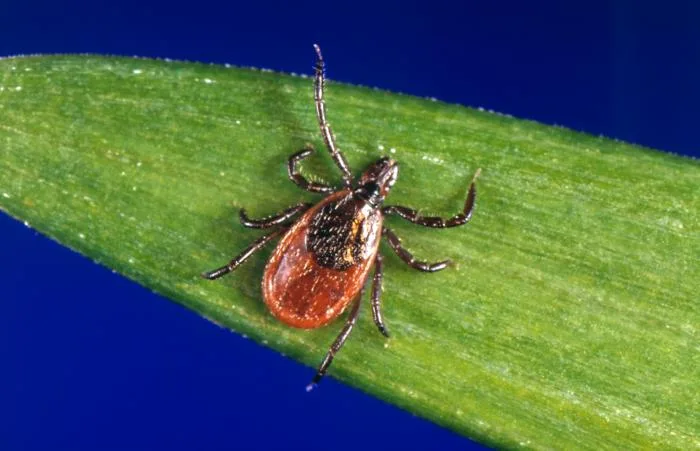
Real dorsal view of a female Ixodes scapularis tick, a species found in North America
Real photograph: female Ixodes scapularis. CDC / Jim Gathany; provider CDC / Michael L. Levin. Public domain. Free source: CDC PHIL, image 1669. This North American species cannot identify all ticks found in Europe.
Keep in mind

One vector group can transmit several pathogens. Finding a vector does not demonstrate the presence of a pathogen or local transmission.

References for these explanations

Sources consulted on . Examples and diagrams are educational; the original guidance defines its scope.

QuestionsClarifications

Frequently Asked Questions

Does the presence of the tiger mosquito mean that a disease is circulating?

No. An agent must also be introduced and the conditions for transmission met; only the authorities can confirm a local transmission.

Does a tick bite always cause a disease?

No. Remove the tick according to the recommendations, note the date and monitor the signs that warrant consultation.

Do all mosquitoes transmit the same diseases?

No. Species, agents that can be transmitted and circulation zones vary.

Does a bite mean infection?

No. The transmission depends in particular on the vector, the presence of the agent and the conditions of exposure.

Institutional sources

External sources can evolve. Check their date and instructions for your territory.

PratiqueCheck before deciding

Du vecteur observé à la transmission confirmée

Reading guidance and interpretation limits
Concept or situationWhat it describesPoint to watch
Vecteur présentUn moustique ou une tique est observé.L’espèce et la surveillance locale doivent être connues.
Agent detectedUn agent est identifié chez un vecteur ou un hôte.Préciser la méthode et le périmètre du prélèvement.
Local transmissionUn cas est relié à une exposition sur place.Distinguer cas importé, cas local et simple suspicion.